How to Use AI Deep Research to Truly Understand Your Target Market
Most businesses don’t fail because their ads are bad. They fail because they don’t actually understand their market.
How to Use AI Deep Research to Truly Understand Your Target Market
Most businesses don’t fail because their ads are bad.
They fail because they don’t actually understand their market.
They think they do. Likewise, they can list demographics. Furthermore, they know the industry. They’ve talked to a few clients. But when it comes to deep understanding, language, fears, objections, internal logic, decision triggers, they’re guessing.
This is where AI deep research changes the game.
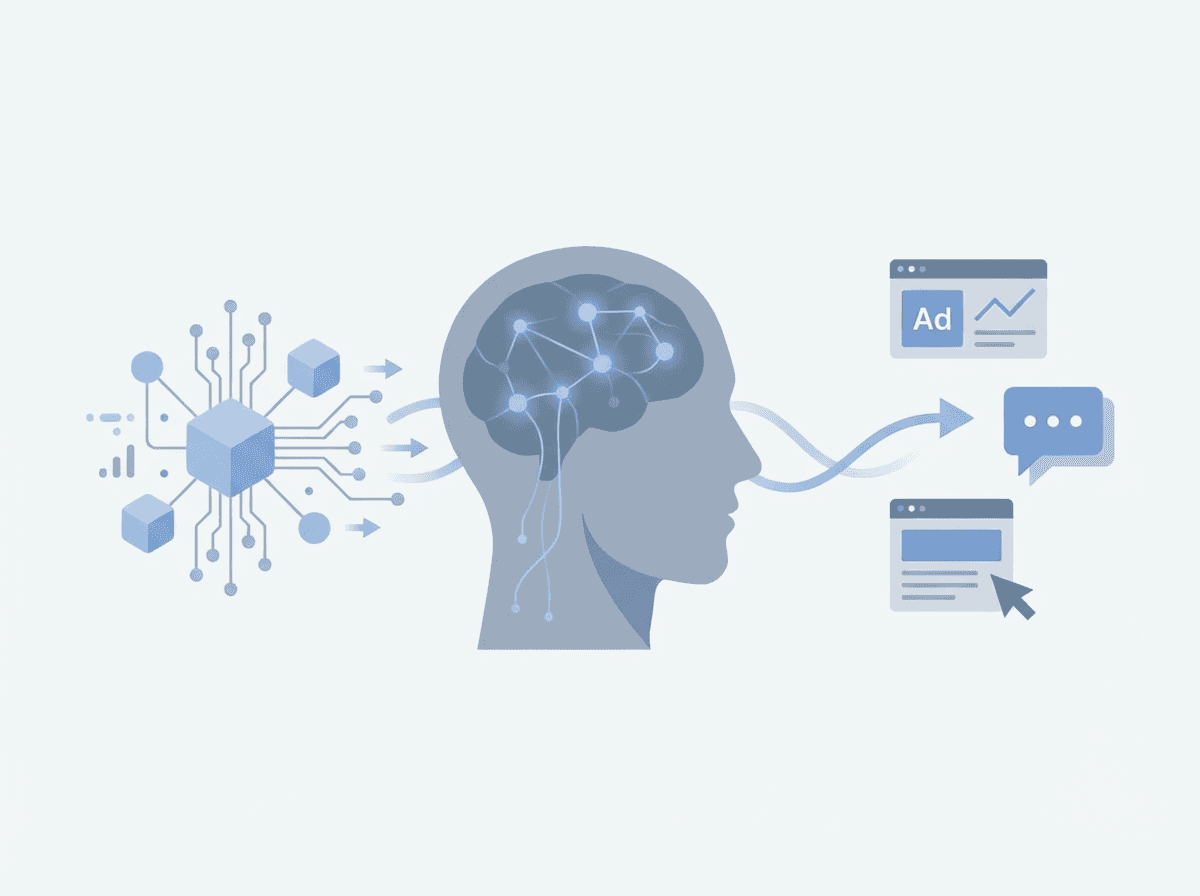
Used correctly, tools like ChatGPT, Gemini, allow you to compress weeks (sometimes months) of market research into hours, and uncover insights most competitors will never see.
Not surface-level summaries. Deep patterns.
In this article, I’ll show you:
What “AI deep research” actually means (and what it doesn’t)
How to use it to understand your target market at a psychological level
How those insights translate directly into better copy, landing pages, ads, and creatives
Why this unlocks new pain points, not recycled ones
This isn’t about replacing thinking. It’s about amplifying it.
What AI Deep Research Really Is (And Isn’t)
Let’s clear something up first.
AI deep research is not:
Asking “Who is my target audience?”
Generating generic buyer personas
Getting obvious insights you already know
That’s shallow prompting.
AI deep research is about using large language models to:
Analyze patterns across massive amounts of human-generated content
Extract emotional, linguistic, and logical structures
Simulate how a market thinks, not just what it buys
You’re not outsourcing understanding.
You’re using AI as a pattern recognition engine.
Why This Matters More Than Ever
Markets today are:
Saturated
Hyper-competitive
Extremely sensitive to messaging
Everyone has access to the same platforms, the same ad tools, and the same audiences.
The real advantage is who understands the buyer better.
Better understanding leads to:
Stronger positioning
Sharper copy
Cleaner landing pages
Ads that feel “too accurate” to ignore
AI deep research accelerates this advantage.
Step 1: Feed the AI the Right Context
AI output quality is directly proportional to context quality.
Before asking for insights, you need to define:
Who the market is
What they’re trying to achieve
What’s at stake if they fail
Instead of saying:
“Analyze my target audience.”
You say:
“Assume the role of a behavioral analyst studying [specific market]. Analyze their decision-making logic, fears, objections, internal narratives, and language patterns.”
This single shift moves you from surface-level answers to strategic ones.
Step 2: Extract Psychological Pain Points (Not Just Problems)
Most businesses stop at functional problems:
“I need more leads”
“I want more sales”
Those are symptoms.
AI deep research helps you uncover psychological pain points, such as:
Fear of wasting money
Anxiety around inconsistency
Loss of control
Embarrassment of failure
Distrust from past bad experiences
When you prompt correctly, AI can surface:
What your market is afraid to admit publicly
What they blame themselves for
What keeps them stuck in inaction
These insights are where high-converting copy comes from.
Step 3: Analyze Language and Vocabulary Patterns
Words matter more than tactics.
Using AI, you can analyze:
Common phrases your market uses
How they describe their problems
What words they avoid
What language signals trust or skepticism
This lets you:
Write ads that sound native to the market
Build landing pages that feel familiar
Reduce resistance by mirroring their internal dialogue
When people say “This feels like it was written for me,” this is why.
Step 4: Simulate Buying Decisions
One of the most powerful uses of AI deep research is decision simulation.
You can ask the model to:
Simulate how a prospect evaluates an offer
Identify what objections appear at each stage
Predict where friction or drop-off occurs
This insight allows you to:
Restructure landing pages
Reorder sections for logical flow
Pre-handle objections before they appear
Instead of guessing what might block conversions, you design around it intentionally.
Step 5: Translate Insights Into Better Landing Pages
Once you understand:
What the market fears
What they want
How they think
Your landing page changes naturally.
AI research helps you decide:
What to say first
What to delay
What to emphasize
What to remove entirely
You stop stuffing pages with information and start guiding decisions.
Clarity beats persuasion.
Step 6: Unlock New Ad Angles and Creative Directions
This is where things get interesting.
Most ads fail because they recycle the same surface-level angles everyone else is using.
AI deep research reveals:
Overlooked frustrations
Secondary pain points
Emotional contradictions
Internal conflicts
These insights unlock:
New hooks
New storylines
New creative concepts
Ads that don’t look or feel like ads
When your creative speaks to something unspoken, attention becomes effortless.
Step 7: Improve Sales Conversations
The same insights don’t stop at marketing.
They improve sales because:
You understand objections before hearing them
You know what prospects are worried about
You can guide conversations instead of reacting
Sales becomes alignment, not persuasion.
What Most People Get Wrong About AI Research
They ask shallow questions
Depth comes from prompts, not models.
They accept the first answer
Deep research is iterative. You push, refine, and challenge outputs.
They don’t connect insights to execution
Research without application is wasted.
They use AI instead of thinking
AI augments judgment, it doesn’t replace it.
The Real Advantage
AI deep research doesn’t make you smarter.
It makes you faster at seeing what matters.
While others test endlessly, you:
Enter the market with clarity
Speak directly to real pain
Build offers and creatives that feel obvious
That’s not magic.
That’s leverage.
Final Thought
The businesses that win in the next few years won’t be the ones with the biggest budgets.
They’ll be the ones who understand their customers the best.
AI deep research is not optional anymore.
It’s the new baseline.
Use it well.
Learn the System or Let Us Run It

Our flagship program
Clients With Ads Program
The best program on the market for generating qualified leads and booked appointments with paid ads.
No fluff. No 50-hour theory dumps. Just a fast, business-specific, step-by-step system that takes you from beginner to running profitable campaigns in as little as 7-14 days.
Master Google, Meta, and YouTube ads. Learn positioning, messaging, funnel strategy, and optimization, everything you need to turn ads into your most predictable growth channel.
From beginner to advanced.
Done with you service
We Run Your Ads For You
For business owners who want results without the learning curve.
Our done-with-you service builds and manages your entire ad system, strategy, funnels, campaigns, daily optimization, everything.
We handle execution and get you live fast.
High-touch implementation for established businesses doing at least ($30k+/month) and ready to scale predictably.

Community
Follow Us On Social:


How to Use AI Deep Research to Truly Understand Your Target Market
Most businesses don’t fail because their ads are bad.
They fail because they don’t actually understand their market.
They think they do. Likewise, they can list demographics. Furthermore, they know the industry. They’ve talked to a few clients. But when it comes to deep understanding, language, fears, objections, internal logic, decision triggers, they’re guessing.
This is where AI deep research changes the game.
Used correctly, tools like ChatGPT, Gemini, allow you to compress weeks (sometimes months) of market research into hours, and uncover insights most competitors will never see.
Not surface-level summaries. Deep patterns.
In this article, I’ll show you:
What “AI deep research” actually means (and what it doesn’t)
How to use it to understand your target market at a psychological level
How those insights translate directly into better copy, landing pages, ads, and creatives
Why this unlocks new pain points, not recycled ones
This isn’t about replacing thinking. It’s about amplifying it.
What AI Deep Research Really Is (And Isn’t)
Let’s clear something up first.
AI deep research is not:
Asking “Who is my target audience?”
Generating generic buyer personas
Getting obvious insights you already know
That’s shallow prompting.
AI deep research is about using large language models to:
Analyze patterns across massive amounts of human-generated content
Extract emotional, linguistic, and logical structures
Simulate how a market thinks, not just what it buys
You’re not outsourcing understanding.
You’re using AI as a pattern recognition engine.
Why This Matters More Than Ever
Markets today are:
Saturated
Hyper-competitive
Extremely sensitive to messaging
Everyone has access to the same platforms, the same ad tools, and the same audiences.
The real advantage is who understands the buyer better.
Better understanding leads to:
Stronger positioning
Sharper copy
Cleaner landing pages
Ads that feel “too accurate” to ignore
AI deep research accelerates this advantage.
Step 1: Feed the AI the Right Context
AI output quality is directly proportional to context quality.
Before asking for insights, you need to define:
Who the market is
What they’re trying to achieve
What’s at stake if they fail
Instead of saying:
“Analyze my target audience.”
You say:
“Assume the role of a behavioral analyst studying [specific market]. Analyze their decision-making logic, fears, objections, internal narratives, and language patterns.”
This single shift moves you from surface-level answers to strategic ones.
Step 2: Extract Psychological Pain Points (Not Just Problems)
Most businesses stop at functional problems:
“I need more leads”
“I want more sales”
Those are symptoms.
AI deep research helps you uncover psychological pain points, such as:
Fear of wasting money
Anxiety around inconsistency
Loss of control
Embarrassment of failure
Distrust from past bad experiences
When you prompt correctly, AI can surface:
What your market is afraid to admit publicly
What they blame themselves for
What keeps them stuck in inaction
These insights are where high-converting copy comes from.
Step 3: Analyze Language and Vocabulary Patterns
Words matter more than tactics.
Using AI, you can analyze:
Common phrases your market uses
How they describe their problems
What words they avoid
What language signals trust or skepticism
This lets you:
Write ads that sound native to the market
Build landing pages that feel familiar
Reduce resistance by mirroring their internal dialogue
When people say “This feels like it was written for me,” this is why.
Step 4: Simulate Buying Decisions
One of the most powerful uses of AI deep research is decision simulation.
You can ask the model to:
Simulate how a prospect evaluates an offer
Identify what objections appear at each stage
Predict where friction or drop-off occurs
This insight allows you to:
Restructure landing pages
Reorder sections for logical flow
Pre-handle objections before they appear
Instead of guessing what might block conversions, you design around it intentionally.
Step 5: Translate Insights Into Better Landing Pages
Once you understand:
What the market fears
What they want
How they think
Your landing page changes naturally.
AI research helps you decide:
What to say first
What to delay
What to emphasize
What to remove entirely
You stop stuffing pages with information and start guiding decisions.
Clarity beats persuasion.
Step 6: Unlock New Ad Angles and Creative Directions
This is where things get interesting.
Most ads fail because they recycle the same surface-level angles everyone else is using.
AI deep research reveals:
Overlooked frustrations
Secondary pain points
Emotional contradictions
Internal conflicts
These insights unlock:
New hooks
New storylines
New creative concepts
Ads that don’t look or feel like ads
When your creative speaks to something unspoken, attention becomes effortless.
Step 7: Improve Sales Conversations
The same insights don’t stop at marketing.
They improve sales because:
You understand objections before hearing them
You know what prospects are worried about
You can guide conversations instead of reacting
Sales becomes alignment, not persuasion.
What Most People Get Wrong About AI Research
They ask shallow questions
Depth comes from prompts, not models.
They accept the first answer
Deep research is iterative. You push, refine, and challenge outputs.
They don’t connect insights to execution
Research without application is wasted.
They use AI instead of thinking
AI augments judgment, it doesn’t replace it.
The Real Advantage
AI deep research doesn’t make you smarter.
It makes you faster at seeing what matters.
While others test endlessly, you:
Enter the market with clarity
Speak directly to real pain
Build offers and creatives that feel obvious
That’s not magic.
That’s leverage.
Final Thought
The businesses that win in the next few years won’t be the ones with the biggest budgets.
They’ll be the ones who understand their customers the best.
AI deep research is not optional anymore.
It’s the new baseline.
Use it well.
Our flagship program
Clients With Ads Program
The best program on the market for generating qualified leads and booked appointments with paid ads.
No fluff. No 50-hour theory dumps. Just a fast, business-specific, step-by-step system that takes you from beginner to running profitable campaigns in as little as 7-14 days.
Master Google, Meta, and YouTube ads. Learn positioning, messaging, funnel strategy, and optimization, everything you need to turn ads into your most predictable growth channel.
From beginner to advanced.
Done with you service
We Run Your Ads For You
For business owners who want results without the learning curve.
Our done-with-you service builds and manages your entire ad system, strategy, funnels, campaigns, daily optimization, everything.
We handle execution and get you live fast.
High-touch implementation for established businesses doing at least ($30k+/month) and ready to scale predictably.
Done with you service
We Run Your Ads For You
For business owners who want results without the learning curve.
Our done-with-you service builds and manages your entire ad system, strategy, funnels, campaigns, daily optimization, everything.
We handle execution and get you live fast.
High-touch implementation for established businesses doing at least ($30k+/month) and ready to scale predictably.
Community
Follow Us On Social:
You might also like